Need help? Call us 0800 032 9366
Current location: Home > Research | Serious Readers
Is Junk Light Making Us Ill? | The Research | Serious Readers

Is junk light
making us
ill?

Most of us spend our lives under artificial light. Peer-reviewed research is now showing what that does to our eyes, our sleep, and our health.

See the Evidence
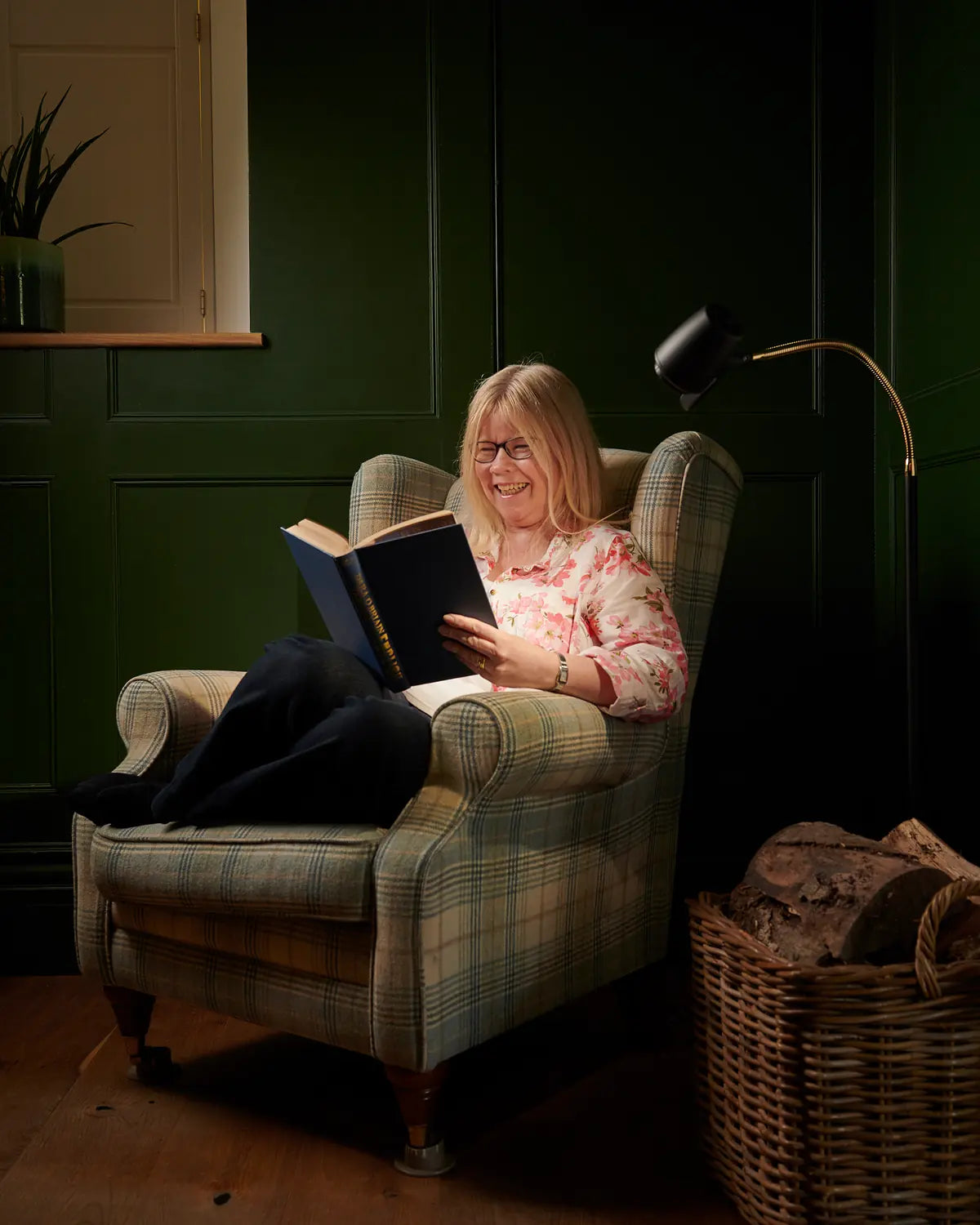
Reading under poor lighting
The Problem
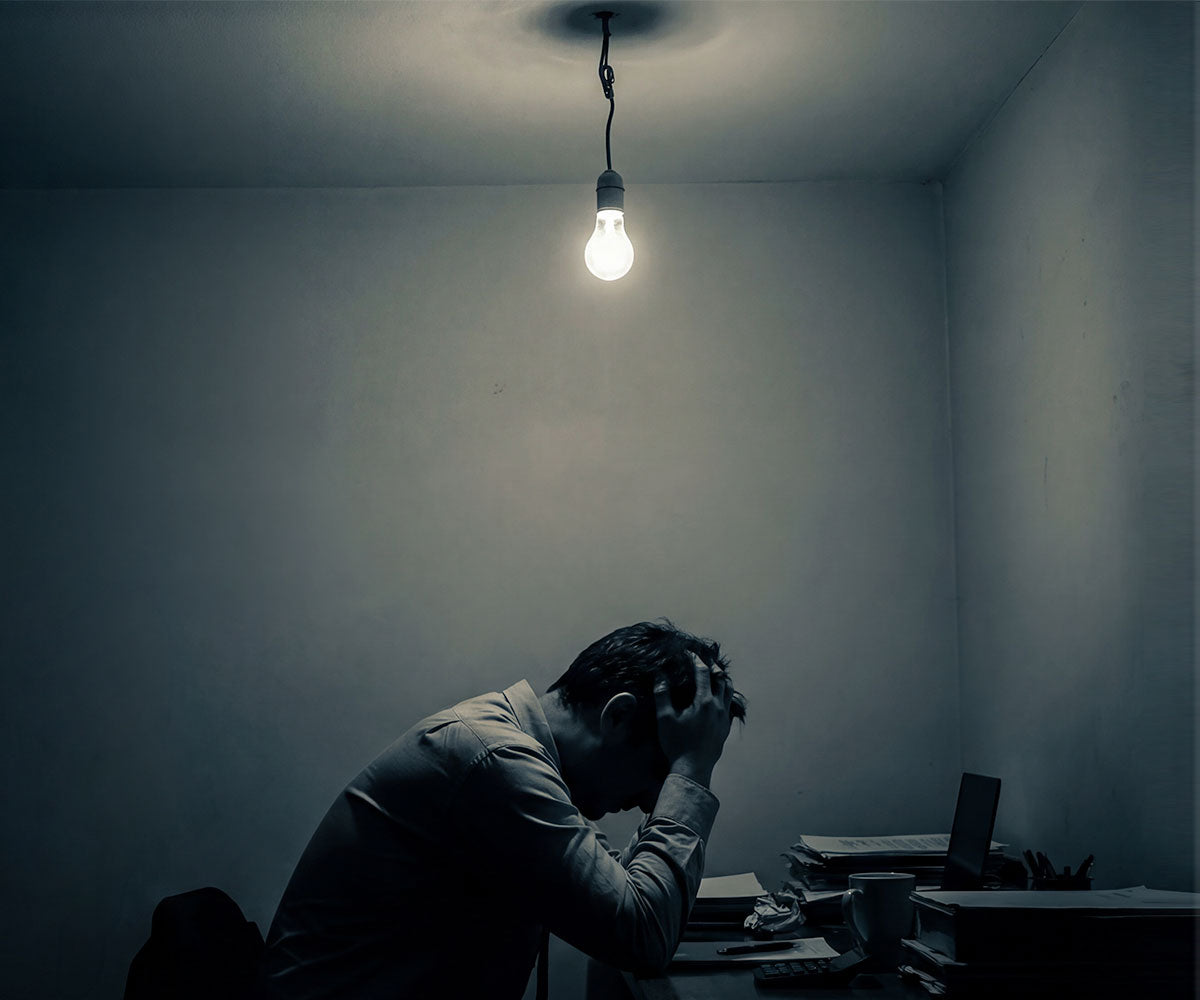
93% of our time is spent in enclosed environments. The light inside is nothing like the light we evolved under.

Think of it like junk food.

Like junk food, junk light is everywhere. It’s cheap. And most people don’t realise it’s affecting them. The spectrum is incomplete. Heavy on blue, deficient in red.

Sources
Klepeis NE et al. “The National Human Activity Pattern Survey.” J Expo Anal Environ Epidemiol, 2001. PubMed Holzman DC. “What’s in a color? The unique human health effects of blue light.” Environ Health Perspect, 2010. PMC Shen S et al. “Red-emitting phosphors for white LEDs.” RSC Advances, 2021. DOI
Your Eyes

What junk light does to your vision.

Shorter-wavelength light creates more scatter inside the eye, and the effect is measurably worse in lighter-pigmented eyes. You experience it as more glare, weaker contrast, and text that feels harder to hold steady.

Sources
Coppens JE et al. “Wavelength dependence of intraocular straylight.” Exp Eye Res, 2006. PubMed Zuclich JA et al. “Near-UV/blue light-induced fluorescence in the human lens.” J Biomed Opt, 2005. PubMed Kohnen T, Hammond BR. “Blue light filtration.” Clin Ophthalmol, 2024. PubMed Fu X et al. “Correlated color temperature and visual comfort.” Sustainability, 2023. DOI
Your Sleep

Your body clock runs on light.

Light tells your body when to sleep, when to wake, and when to repair. The wrong spectrum at the wrong time can override all of it.

We built our lights to help you see more clearly. But there is growing evidence that the spectrum of your light matters for reasons you cannot see at all, and may well feel.

Sources
Brainard GC et al. “Action spectrum for melatonin regulation.” J Neuroscience, 2001. PubMed Gooley JJ et al. “Room light before bedtime suppresses melatonin.” JCEM, 2011. PubMed West KE et al. “Blue light from LEDs: dose-dependent melatonin suppression.” J Appl Physiol, 2011. PubMed Chellappa SL et al. “Evening blue-enriched light impacts sleep.” J Sleep Res, 2013. PubMed LeGates TA et al. “Light as a central modulator of circadian rhythms, sleep and affect.” Nat Rev Neurosci, 2014. PubMed Dijk DJ. “Regulation and functional correlates of slow wave sleep.” J Clin Sleep Med, 2009. PubMed
Your Health

It doesn’t stop at sleep.

When your body clock is chronically disrupted, the effects reach further than you might expect.

IARC (WHO Cancer Agency)

In 2019, IARC classified night shift work as “probably carcinogenic to humans”. The reason? Chronic disruption to the body’s circadian rhythm.

International Agency for Research on Cancer, 2019
Sources
Systematic review: “Circadian disruption and cancer risk.” 75 studies. PMC Baidoo A et al. “Circadian disruption and cardiometabolic disease.” Obesity, 2023. PubMed AHA. “Circadian health and cardiometabolic disease.” Circulation, 2025. PubMed IARC. “Evaluation of the carcinogenicity of night shift work.” 2019. IARC Sletten TL et al. “Health consequences of circadian disruption.” Sleep, 2020. PubMed IARC Working Group. Night Shift Work. IARC Monographs Vol. 124, 2020. NCBI Bookshelf

Change the light. Change the day.

Sources
Viola AU et al. “Blue-enriched light improves alertness, performance and sleep.” SJWEH, 2008. PubMed Vandewalle G et al. “Wavelength-dependent modulation of brain responses.” Cerebral Cortex, 2007. PubMed Vandewalle G et al. “Light as a modulator of cognitive brain function.” Trends Cogn Sci, 2009. PubMed Mu Y et al. “Alerting effects of light: systematic review and meta-analysis.” Sleep Med Rev, 2022. PubMed

What does the difference look like?

This is a representation, but the principle is real. On the left, a narrow-spectrum LED forces your eyes to fill in what the light leaves out. On the right, a fuller spectrum does the work for you. Drag the slider. In person, the difference is even more striking.

Standard LED67% CRI Full Spectrum98% CRI
The garden was coming alive with the first light of spring. Delicate primroses dotted the borders, their pale yellow petals catching the morning sun. A blackbird sang from the old apple tree, its melody drifting across the lawn where dewdrops still glistened on every blade of grass.
Cleaner letter edges Truer colour rendering Less visual effort
A Better Light Exists

Built on the evidence.

Forty years ago, we set out to build a reading light that worked with your eyes instead of against them. The research on this page explains why that approach works, and what else it may do for you.

Our Daylight Wavelength Technology™ delivers a continuous, full-spectrum output instead of the narrow spikes common in standard LEDs. Sharper text, truer colours, and markedly less strain. You notice the difference the moment you switch it on.

HD Pro Table Light

HD Pro

Full control. Full spectrum.

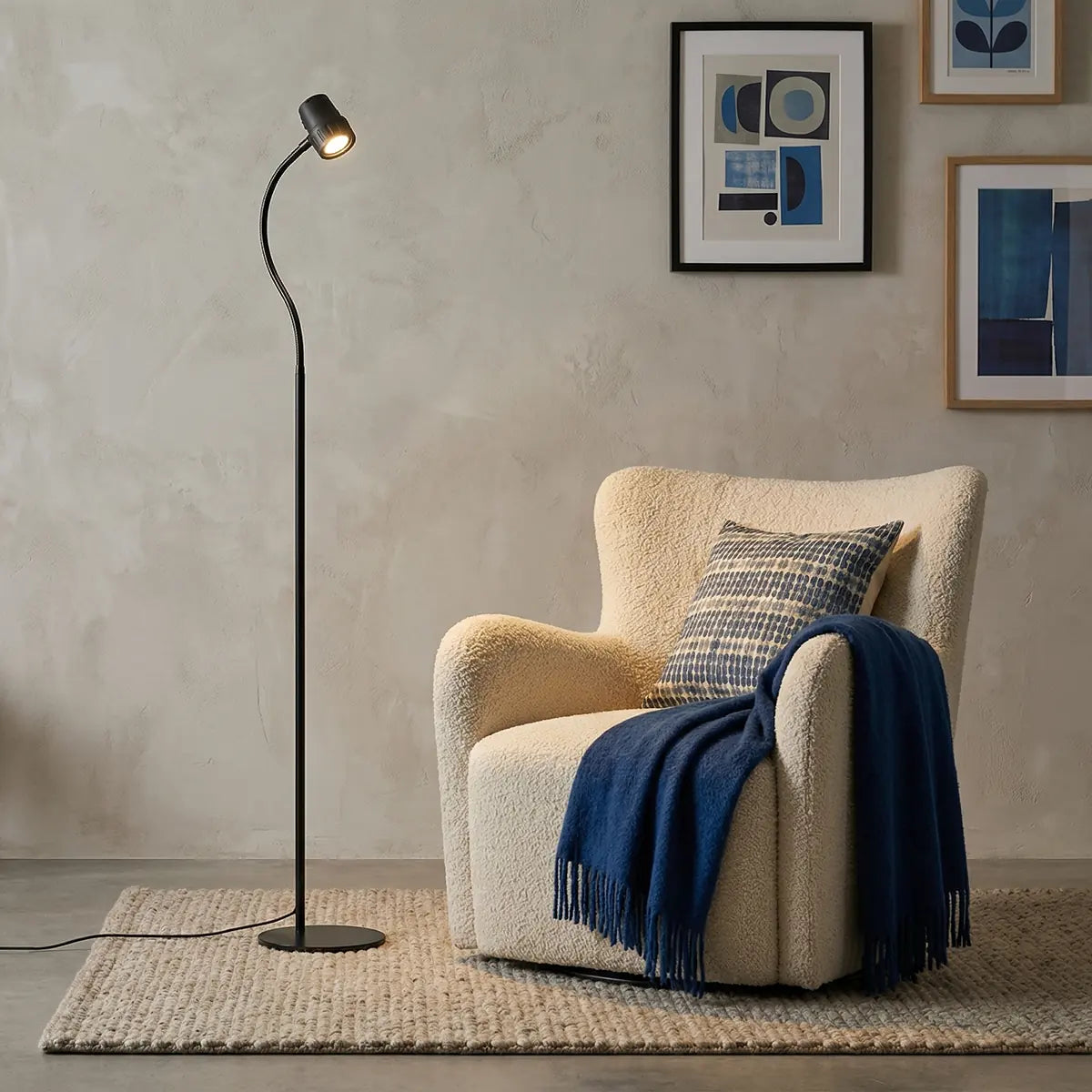
Our flagship. Dimmable, with a shapeable beam you can direct exactly where you need it. 98% colour accuracy. Available as Table or Floor.

From £449.99

90-day risk-free trial

Try the HD Pro Risk-Free
HD Essential Floor Light

HD Essential

Same spectrum. Simpler design. Best value.

The same Daylight Wavelength Technology™ in a streamlined design. 98% colour accuracy. Table and Floor versions.

From £349.99

30-day risk-free trial

Try the HD Essential Risk-Free
“The impact was immediate. Something rarely experienced with other purchases.”
Mr Griffin, Leicestershire • Verified Buyer
90 / 30 daysTrial period (Pro / Essential)
5 yrsWarranty (extendable to 10)
500+Opticians recommend us
0800 028 1890 Speak to our light experts, Mon–Fri 9am–5pm

Questions worth asking.

About the research

No. Every claim on this page comes from independent, peer-reviewed research published in scientific journals. Serious Readers is reporting what scientists and clinicians have found, not making health claims about our products. We link to every source so you can verify them yourself.

All sources are indexed on PubMed or published in peer-reviewed journals. They include studies from the Journal of Neuroscience, Circulation (American Heart Association), and Experimental Eye Research. Full references are listed at the bottom of this page.

Light quality is one piece of a bigger picture. A better reading light won’t change your prescription or cure a medical condition. But the research consistently shows that the spectrum of light you’re exposed to affects visual comfort, sleep quality, and alertness. Improving it is a simple, measurable change you can make today.

‘Daylight’ usually means a cooler colour temperature, not a more complete spectrum. A bulb can look whiter and still have the same blue spike and red gaps. Our Daylight Wavelength Technology™ is measured to TM-30 standards: Rf 98 colour fidelity, with a continuous spectrum from 380–780nm. See the lab report →

Ready to see the difference?

Every light in the range includes a risk-free home trial. HD Pro: 90 days. HD Essential: 30 days.

Choose Your Light

Free UK delivery. Free returns. No questions.

Sources

All sources are peer-reviewed. Indexed on PubMed unless otherwise noted.

Vision & Eyestrain

Coppens JE et al. “Wavelength dependence of intraocular straylight.” Experimental Eye Research, 2006. PMID: 16293245

Zuclich JA et al. “Near-UV/blue light-induced fluorescence in the human lens.” J Biomed Opt, 2005. PMID: 16178654

Kohnen T, Hammond BR. “Blue light filtration: effects on visual function and systemic health.” Clinical Ophthalmology, 2024. PMID: 38835885

Fu X et al. “Correlated color temperature and visual comfort.” Sustainability, 2023. DOI: 10.3390/su15043826

Sleep & Circadian Rhythm

Brainard GC et al. “Action spectrum for melatonin regulation.” J Neuroscience, 2001. PMID: 11487664

Gooley JJ et al. “Room light before bedtime suppresses melatonin.” J Clin Endocrinol Metab, 2011. PMID: 21193540

West KE et al. “Blue light from LEDs: dose-dependent melatonin suppression.” J Appl Physiol (1985), 2011. PMID: 21164152

Chellappa SL et al. “Evening blue-enriched light impacts sleep.” J Sleep Research, 2013. PMID: 23509952

LeGates TA et al. “Light as a central modulator of circadian rhythms, sleep and affect.” Nature Reviews Neuroscience, 2014. PMID: 24917305

Dijk DJ. “Regulation and functional correlates of slow wave sleep.” J Clinical Sleep Medicine, 2009. PMID: 19998869

Alertness & Cognitive Function

Vandewalle G et al. “Wavelength-dependent modulation of brain responses.” Cerebral Cortex, 2007. PMID: 17404390

Viola AU et al. “Blue-enriched light improves alertness, performance and sleep.” Scand J Work Environ Health, 2008. PMID: 18815716

Vandewalle G et al. “Light as a modulator of cognitive brain function.” Trends Cogn Sci, 2009. PMID: 19748817

Mu Y et al. “Alerting effects of light: systematic review and meta-analysis.” Sleep Med Rev, 2022. PMID: 35142669

Long-Term Health Risks

Systematic review: “Circadian disruption and cancer risk.” 75 studies, 2003–2023. PMC: PMC12529610

Baidoo A et al. “Circadian disruption and cardiometabolic disease risk.” Obesity, 2023. PMID: 36750239

American Heart Association. “Circadian health and cardiometabolic disease.” Circulation, 2025. PMID: 41147137

International Agency for Research on Cancer (IARC). “IARC Monographs evaluation of the carcinogenicity of night shift work.” 2019. IARC

IARC Working Group. Night Shift Work. IARC Monographs on the Identification of Carcinogenic Hazards to Humans, Vol. 124, 2020. NCBI Bookshelf

Sletten TL et al. “Health consequences of circadian disruption.” Sleep, 2020. PMID: 31930347

Indoor Exposure

Klepeis NE et al. “The National Human Activity Pattern Survey.” J Expo Anal Environ Epidemiol, 2001. PMID: 11477521

Light Source Characteristics

Holzman DC. “What’s in a color? The unique human health effects of blue light.” Environmental Health Perspectives, 2010. PMC: PMC2831986

Shen S et al. “Red-emitting phosphors for white LEDs.” RSC Advances, 2021. DOI: 10.1039/D1RA01291F